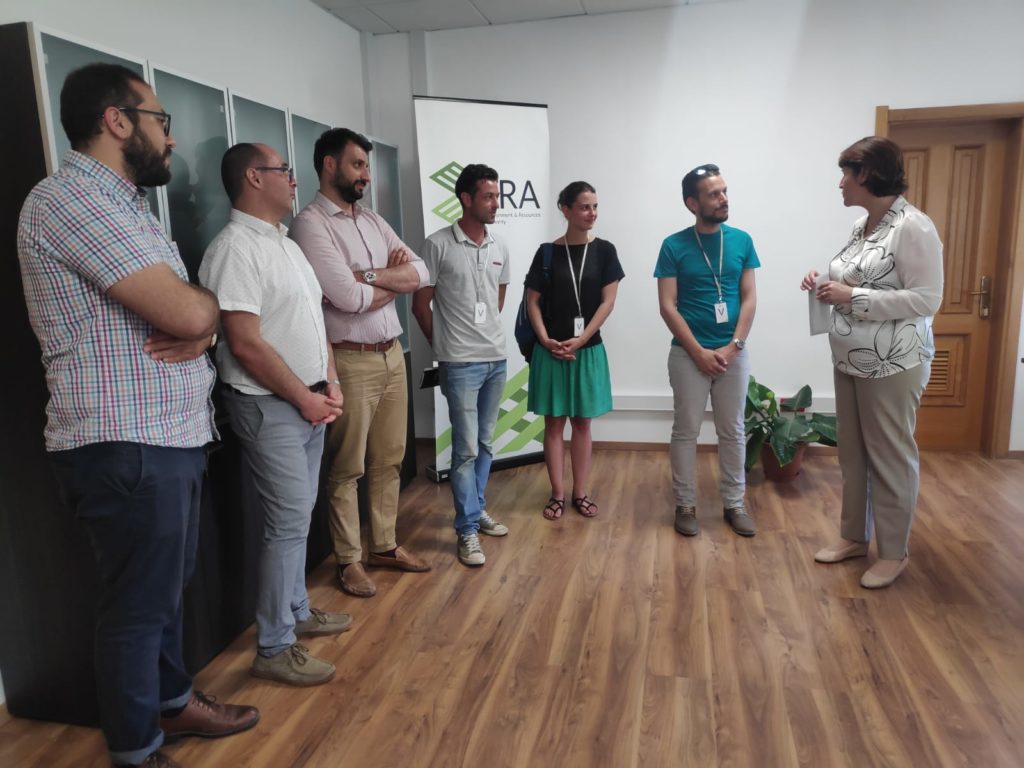
Thirty staff members working at the Environment and Resources Authority (ERA) registered to have their organs donated after their death. During this same initiative organised by the ERA, a further 19 individuals donated blood.

ERA invited workers from three other companies in the vicinities to visit its premises, where the National Blood Transfusion Service`s mobile unit was present in the parking area, as well as representatives from the National Human Organ and tissues Donation Register.

ERA’s CEO, Dr Louise Spiteri said that such Initiatives complement the Authority’s operations as the regulator for the environment and our obligation to contribute to a sustainable quality of life, and show how generous Maltese and Gozitan workers can be. She added that the significant number of donations reflect the responsibility that ERA employees feel towards current and future Maltese generations.

“I augur that this success helps encourage other companies to organise similar events” continues Dr Spiteri. “This gesture, which occurred during working hours, helps in reducing blood shortages, and significantly increases the quality of life of those in need of blood donations”

She concluded by saying that after this event`s success, the ERA`s administration is considering it as an annual initiative.​

The Environment and Resources Authority (ERA), is participating in an Interreg Europe project bearing the name WINPOL – Waste Management Intelligent Systems and Policies. This project aims to improve policies for waste management so that they increasingly foster and promote the use of intelligent equipment and systems for waste disposal and collection, to contribute to waste minimisation in European cities and regions, through improved management procedures and awareness campaigns.

WINPOL is led by EMULSA (Municipal Company of Urban Environment Services of Gijón) and involves a partnership of 9 European waste management entities from different regions in Spain, Belgium, Greece (Crete), Slovenia, and Romania. The project involves a strong knowledge-sharing component, bringing together cities and regions with experience in smart waste management equipment, and cities and regions planning to introduce them in the mid-term. It will run for 54 months from June 2018 to December 2022, and has a total budget of €1,363,045, of which ERA’s share is €90,967. The project is part-financed by the Interreg Europe 2014-2020 programme at a rate of 85%.

The ERA has already organised the first out of four Target Communication Events, during which a number of eNGOs and organisations were invited to represent civil society. The attendees were provided with an overview of the project and the current intelligent waste management equipment which has already been implemented in partner regions. Current technology and innovation in the waste sector allow container-systems to provide information in real-time, about various parameters including their remaining available capacity to waste collectors; and temperature, amongst others. Such systems are linked to ICT-based solutions which can be used to analyse usage trends, and identify critical groups of waste producers.

Participants highlighted that implementing a legal framework targeting municipal waste through intelligent waste storage units, within new development areas is important to tackle waste separation at source. The Earth Systems Association put forward the notion of underground waste storage units, and indicated that it could be ideal for the local scenario given the limited space available within urban areas.

Furthermore, the attendees emphasised the importance of awareness-raising campaigns for the proper functioning of smart technologies in waste management. In fact, EcoGozo has organised sessions, whereby activities targeting waste separation were organised for children on blue-flagged beaches in Gozo, providing rewards as an incentive to participate. Ultimately, participants identified the main issues within the sector, particularly the generation of food waste in large quantities and the concerning amounts of single-use plastics being generated during concerts, festivals and village feasts. ERA believes that these discussions were rather fruitful and participants offered a number of valuable ideas, which may be incorporated into the Project Action Plan.

Future events will be targeting small and medium enterprises, experts in ICT, the research and innovation sector, and policy institutions. Should you fall within any of these target groups, and are interested in attending, kindly contact ERA on [email protected].

The ERA will be participating in the first thematic seminar focusing on the “Use of Information and Data in the Waste Field” to be held in Maribor Slovenia in mid-May.

For more information:

Phone (+356) 2292 3500

Email: [email protected]

Those visiting St George’s Square over the weekend will be able to witness an urban space transformed into a spectacle of flowers and colours, as part of the Valletta Green Festival.

The Environment and Resources Authority (ERA) is participating in this festival to communicate its role as a regulator for the environment. ERA’s stand this year has several displays manned by experts, which include interactive games such as a giant carpet game that takes on an environmental twist to the classic snakes and ladders game. This year’s flower display, as part of the festival organized by the Valletta Cultural Agency, takes on an eye-opening angle, having plastic litter accompany some of the 80,000 plants and flowers in order to highlight the ugliness of plastic litter.

  • Air Quality
    This stand provides an interactive experience, delving into the sources of air pollution, ERA’s air quality monitoring network, the health effects of air pollutants, the actions to be taken in order to improve air quality, together with the resulting benefits. ERA monitors air quality in real time, by means of technological systems placed in Msida, Żejtun, Attard and a rural site in Għarb, Gozo. The data from these stations is available in real time on the ERA’s website.
  • International Trade of Endangered Species
    Some animals, plants and their related products are confiscated when they are transported. Their shipping is prohibited because of their protected status. In this regard, ERA has put together an exhibition which raises awareness on CITES; a convention intended to protect certain wild species from being traded and exploited unsustainably, as their extinction would have irreversible ecological consequences and economic and social effects. Those visiting St George’s Square will be able to see items that were confiscated and learn about what not to transport.
  • Compliance and Enforcement
    A directorate responsible for compliance and enforcement operates within ERA, handling various environmental aspects. The work conducted by this directorate is displayed during Green Fest. Last year, ERA issued 11 administrative fines on individuals, commercial companies and parastatal agencies, totalling €157,845. These covered various contraventions, including non-abidance with permit conditions, pollution of the sea and the unlawful removal of trees.
  • LIFE BaĦAR
    Members from the LIFE BaĦAR project are present in St George’s Square to raise awareness about the flora and fauna found in Malta’s seas. LIFE BaĦAR focused on marine life in our waters and it led to three inshore and five offshore areas being proposed for the protection of reef and cave habitats and inclusion in the Natura 2000 network. The new sites have led to an overall increase of protected marine area from 3487 km2 (in 2016) to 4138 km2.
  • Marine litter and Biodiversity
    Would you like to try your hand at fishing? This stand includes two aquariums filled with water and various plastic items to be fished out. ERA representatives are providing information on alternative sustainable items, for every object fished out. In addition, videos related to the various clean-up efforts will be displayed to raise awareness on the massive efforts these entail.ERA invites the public to visit its stands in St George’s Square and interact with the Authority’s dedicated workers, who strive to motivate the public to respect and protect environmental interests.

L-Awtorità għall-Ambjent u r-Riżorsi (ERA) tifraħ lill-parteċipanti ta’ ‘Wave of Change Diving Clean Up’; inizjattiva ta’ għads u ġiri bil-għan li titqajjem kuxjenza dwar il-bżonn li l-ilmijiet tagħna u l-ibħra kollha madwar id-dinja jinżammu ndaf. B’mod partikolari tqajmet kuxjenza dwar il-bżonn li ma jintremiex plastik fil-baħar.

Tul l-inizjattiva, żewġ parteċipanti ġrew 126km madwar Malta, u nġabru sitt tunnellati ta’ skart minn postijiet varji. Filwaqt li ERA tirrikonoxxi l-bżonn ta’ ġbir ta’ skart u inizjattivi simili, tisħaq b’mod partikolari fuq it-trawwim ta’ kultura fejn ma jintremiex skart b’mod irresponsabbli.

Ħajjitna tiddependi mill-ilma. Għalkemm mhux ħafna huma konxji, soċjetajiet u ekonomiji madwar id-dinja jisfaw fix-xejn mingħajr il-ħajja marittima u l-funzjonijiet tagħha. Dawn jinkludu l-iffiltrar, it-taħlit u l-ħażna tal-ilma, il-prevenzjoni tal-għargħar, iż-żamma tal-bilanċ tal-klima lokalment u globalment, u l-ħarsien tad-diversità bijoloġika.

Għaddasa għandhom l-opportunità unika li jinżlu taħt il-wiċċ tal-baħar u jesperjenzaw is-sbuħija inkredibbli tad-dinja taħt l-ilma. Sfortunatament jiġu wiċċ imb’wiċċ ukoll mal-iskart li jħarbat l-ekosistemi tal-ibħra tad-dinja tagħna. Voluntiera bħal dawk li pparteċipaw fil-Wave of Change għandhom ukoll il-ħila li jagħmlu differenza, u għalhekk sabu l-appoġġ tal-ERA.

L-ERA tissorvelja l-kwalità tal-ilmijiet tagħna fuq bażi frekwenti. Infatti, l-Awtorità timxi ma’ liġijiet u regoli estensivi li jkopru l-ilmijiet tal-wiċċ, l-ilmijiet tal-pjan, l-ilma baħar u z-zoni protetti kollha. Programmi ta’ monitoraġġ jippermettu ħarsa ġenerali koerenti u komprensiva tal-istat tal-ilma f’kull distrett fejn jinġabar l-ilma. L-Awtorità tinsab impenjata tistħarreġ dwar il-biodiversità fl-ibħra Maltin, u qiegħda wkoll timplementa diversi attivatijiet u xogħlijiet fuq dan permezz ta’ fondi nazzjonali u internazzjonali, li jinkludu wkoll proġetti finanzjati mill-Unjoni Ewropea.

Wave of Change Diving Cleanup kienet inizjattiva waħda minn bosta li qed isiru. L-ERA tħares lejn l-ilma u l-ibħra Maltin bħala patrimonju u mhux biss bħala riżorsa, għalhekk tibqa’ tisħaq favur il-protezzjoni u t-trattament xieraq tal-ibħra Maltin u Għawdxin u inizjattivi f’dan is-sens.​

The European Environment Agency (EEA) is once again organizing its annual photography competition.

This year the competition is entitled ‘Sustainably Yours’ and focuses on the importance of living sustainably. Photographers will be able to highlight challenges and opportunities from their perspective, according to three main aspects relates to sustainable living: food, energy and mobility.

The winners in each category will be awarded a cash prize of €1000, while €500 is on offer for both a Public Choice Award and a Youth Prize. The latter is awarded to participants aged between 18 and 24.

All finalists will be put forward for the Public Choice Award and may also feature in future digital and print material from the EEA and its European partners.

As an environmental regulator, ERA encourages participation in such competitions. In fact, the Authority’s mission is to safeguard the environment for a sustainable quality of life. ERA believes in artistic expression as one way in which the public may be made aware of environmental issues and in turn encouraged to take ownership in addressing them.

Details on the competition may be found here.


last year’s winners:

The Environment and Resources Authority (ERA) has reviewed the conclusions reached by the Environmental Implementation Review report on Malta, carried out by the European Commission.

It was noted that the European Commission recognises the fact that Malta is one of the leading countries in the EU for reducing primary energy consumption, although the need for waste reduction remains. The Commission also acknowledges the fact that Malta’s 2014-2020 waste management plan recognises the major problems the country is facing with waste management and includes useful policy actions.

Regarding the protection, conservation and enhancement of our natural environment, the Commission notes that the 34 local terrestrial Natura 2000 sites together cover approximately 13% of the total land area of the Maltese Islands. It also welcomes the new designations pertaining to Natura 2000 sites communicated in June 2018, which enhance the protection of reefs and caves.

ERA acts as a regulatory body. Together with the Ministry for the Environment, Sustainable Development and Climate Change and other stakeholders, the Authority prepares various reports and assessments on Malta’s biodiversity. The Authority specifically sees to the implementation of policy, especially from a regulatory perspective, mostly related to the management of protected sites and species, linked with the pressures and threats that could potentially affect them. It also sees to the implementation of policy related to alien species, based on an EU regulation and also including national law. To this effect, various stakeholder meetings are being held, together with educational campaigns aimed at both stakeholders and the general public.

ERA’s water team is seeing to the implementation of the EU Water Acquis, which is primarily linked to achievement of policy objectives and reporting obligations emanating from the EU Water Framework Directive and the EU Marine Strategy Framework Directive. ERA continues to implement a European Maritime and Fisheries Fund project for the improvement of knowledge and better management practices of pressures on the marine environment. In fact, ERA is expected to absorb the full EUR1.6 million in public eligible EMFF funds allocated for this programme, to continue working towards achieving good environmental status in our marine waters. With regards to air emissions, real time air monitoring stations can determine concentrations of most pollutants every fifteen minutes. This information is publically available on ERA’s website.

Compliance and enforcement measures are being strengthened and consolidated, especially with the setting up of an enforcement directorate in July 2018. Increased personnel, together with efforts directed towards their professional training, are leading to better enforcement measures, including the introduction of daily fines when perpetrators do not comply to set regulations. An administrative fines system is now fully functioning and the Authority has hired two ribs in order to better monitor the sea.​

ERA recognises the importance of the recommendations presented by the European Commission. The Authority is currently in the process of developing the National Strategy for the Environment (NSE), which will be within the terms of the Environment Protection Act.

This long-term approach requires that the ERA focuses on what is necessary beyond the typical 5 to 10 year cycles. The overall objectives of the National Strategy for the Environment are to ensure a better and sustainable quality of life, provide a clear and long-term direction for our environment, set out national environmental targets, address the main environmental challenges Malta is facing and integrate and synergise efforts of all policies and stakeholders who directly or indirectly influence the state of our environment.

Finally, ERA strives continuously in order to engage the public in environmental awareness. In fact, the EU Commission recognises figures from 2017’s Eurobarometer, indicating that Malta has a very strong agreement (93% of respondents) that an individual can play a role in protecting the environment. ERA will continue communicating with various stakeholders and individuals, particularly younger generations, for the sake of environmental awareness, the protection of the environment and sustainable good practices.

The Environment and Resources Authority (ERA) has commissioned a consortium to work on a project that is producing concrete data and information, which will aid in ameliorating management practices and address pressures on marine environmental resources. The project will assist the implementation of Malta’s obligations as an EU Member State in relation to the marine environmental sector.

The results of this project, including stakeholder feedback, will contribute to effective management and sustainable use of marine resources, for the benefit of the environment and of all marine sectors. Through this project, the environmental status of Malta’s coastal and marine waters will be assessed, which will enable Malta to continue working towards achieving Good Environmental Status in Maltese marine waters.

The European Maritime and Fisheries Fund (EMFF 2014-2020) project is entitled “Implementation and updating of marine monitoring programmes, assessment of environmental status and development of a marine database system.” ERA commissioned Malta Marine Monitoring Consortium (M3C), comprised of AIS Environment Ltd (Malta) and AZTI Tecnalia (Spain).

As part of the project tasks, M3C organised the fourth and last stakeholder seminar, which was held on 27th February, 2019. During this session, the project and its main objectives were introduced and results that were collected during the first and second monitoring year were described. Additionally, the final steps of the project were described, together with policy implementation and reporting matters.

Entities including the Ministry of Sustainable Development, the Environment and Climate Change, the Ministry for Gozo, the Continental Shelf Directorate, the Environmental Health Directorate, the Planning Authority, and the Department of Fisheries and Aquaculture were represented at the workshop.

A closing conference will be held in May, during which the results of the monitoring data and the assessment of environmental status will be disseminated. Furthermore, the marine database system that has been developed as part of this project will also be promoted.

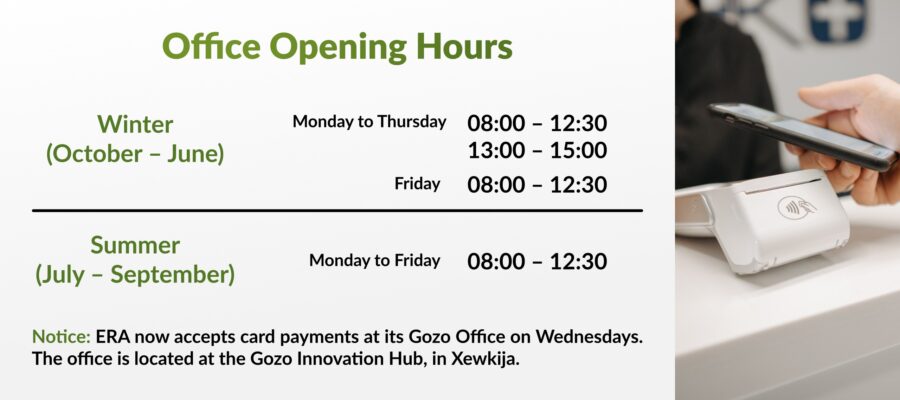
For further information, please contact [email protected] or call on +356 2292 3500 Monday to Friday, 8am to 3pm.

The Environment and Resources Authority (ERA) is expected to absorb the full €1.6 million in public eligible funds (75% EU 25% MT), which were allocated under the European Maritime and Fisheries Fund (EMFF) for 2014-2020 for the implementation of the marine monitoring programme. The results of this project will contribute to effective management and sustainable use of marine resources, for the benefit of the environment and of all marine sectors. Through this project, ERA will also continue working towards achieving Good Environmental Status in marine waters. Maritime and Fisheries Operational Programme 2014-2020 Project part-financed by the European Union European Maritime and Fisheries Fund Co-financing rate: 75% European Union funds; 25% national funds Investing in sustainable fisheries and aquaculture.

A downloadable version of the press release may be obtained from this link​.

Malta is addressing various aspects linked to biodiversity and desertification through the Environment and Resources Authority (ERA) regulated by the Environment Protection Act (CAP. 549).

Malta has declared a number of protected areas, covering 28.5% of the land cover of the Maltese Islands, and 35.5% of our marine waters, which also include Natura 2000 sites declared via the same Act and the EU Habitats Directive (Directive 92/43/EEC). Malta has also established a National Biodiversity Strategy and Action Plan (NBSAP)​ that addresses measures and actions for the 2012-2020 period, and is actively developing a National Strategy on the Environment that will update the current National Environment Policy.

Malta ratified the United Nations Convention to Combat Desertification (UNCCD)​ as an Affected Country Party in 1998. Parities of the UNCCD​ shall implement national action programmes to combat desertification and mitigate the effects of drought. Malta is progressing towards publishing an action program that identifies the factors contributing to desertification and proposes practical measures necessary to combat land degradation and mitigate the effects of drought.

As part of such functions, ERA generates various environment-related data. Such data includes information relating to desertification, in particular assessments of soil erosion, soil quality and land degradation; determines the conservation status, pressures and threats of relevant protected habitat types and species.

The above-mentioned information helps develop appropriate policy and relevant outreach, management, compliance and enforcement actions. The information also helps assess the environment condition that is published in periodic official State of the Environment Reports.

A PowerPoint Presentation highlighting ‘The role of the Environment and Resources Authority in relation to biodiversity and desertification management’ was delivered during the Mediterranean Coastal Erosion Conference, held in November 2018.

Wara investigazzjonijiet mid-Direttorat tal-Infurzar tal-Awtorità għall-Ambjent u r-Riżorsi f’dawn l-aħħar jiem, irriżulta li meded tat-Trejqa tal-Virtù fir-Rabat u ta’ trejqa rurali oħra, ġew imwessgħin konsiderevolment fil-wied li kien jgħaddi maġenbhom. Bnadi minn dawn it-trejqiet issa ġew għandhom żewġ karreġġjati u l-wied spiċċa qisu trinka ta’ maġenb triq.

Minħabba f’dawn ix-xogħlijiet, irriżulta li kien hemm qerda tal-ambjent naturali konsegwenza tat-tqegħid ta’ materjal ta’ kostruzzjoni fuq art li qabel kienet ikkolonizzata b’veġetazzjoni naturali, u bidla fiżika tal-profil ta’ wied u tal-korsa naturali tan-nixxiegħa tal-ilma.

Apparti minn hekk dawn ix-xoghlijiet kollha qed isiru mingħajr il-permessi neċessarji mill-istess Awtorità.

Konsegwentement iktar kmieni llum, l-uffiċjali tal-Awtorità ħarġu ordni ta’ waqfien verbali (verbal stop order) lill-kuntrattur – Galletta Construction Limited, u lill-Infrastructure Malta, skont il-provvedimenti tal-Att dwar il-Protezzjoni tal-Ambjent, filwaqt li iktar tard inħareġ ukoll Ordni ta’ Waqfien u Konformità (Stop and Compliance Order) formali – OWK0015/19 li ġie nnotifikat u huwa applikabbli mil-lum stess.

Ġiet infurmata wkoll l-Awtorità tal-Ippjanar bil-każ.

Intant, l-Awtorità għall-Ambjent u r-Riżorsi qiegħda tinvestiga diversi każijiet oħra ta’ interventi fuq toroq rurali u mhumiex, fosthom f’Wied is-Sewda.

ERA recently attended the Specially Protected Areas Regional Activity Centre (SPA/RAC) Symposia on Mediterranean Marine Key Habitats and ‘Non-Indigenous Species’ (NIS) held in Antalya, Turkey from 14 to 18 January 2019. Scientists, researchers, Non-Governmental Organisations and national representatives from all over the Mediterranean met to exchange knowledge on marine biodiversity conservation and enhance cooperation to achieve the good environmental status of the Mediterranean Sea. The symposia covered four distinct but intertwining themes:

  • 6th Mediterranean Symposium on Marine Vegetation (proceedings);
  • 3rd Mediterranean Symposium on the Conservation of Coralligenous and other Calcareous Bio-Concretions (proceedings);
  • 2nd Mediterranean Symposium on the Conservation of Dark Habitats (proceedings), and
  • 1st Mediterranean Symposium on the Non-Indigenous Species (proceedings).

The symposia provided an opportunity to exchange scientific data and research findings on marine biodiversity conservation, and promoted cooperation between all participants. Key note conferences, oral communications, poster sessions and round tables were held to present the most recent studies dealing with marine key habitats and species introduction in the Mediterranean Sea, and to discuss the best strategies for biodiversity conservation and restoration. A photographic exhibition on marine habitats and non-indigenous species was also held at the conference venue during the symposia.

The information shared and the discussions held at these symposia will help ERA with many of its ongoing programmes of work under important international and regional policies, such as the EU’s Marine Strategy Framework Directive (MSFD), Habitats Directive (92/43/EEC) and Birds Directive (2009/147/EC); SPA/RAC’s Protocol  for  Specially  Protected  Areas  and Biological  Diversity  in  the  Mediterranean  of  the Barcelona Convention (the SPA/BD Protocol); the Bern Convention; the Convention on Biological Diversity (CBD), and Malta’s national law S.L. 549.44, the Flora, Fauna and Natural Habitats Protection Regulations.

Such regional events are important to promote collaboration, and ensure that all stakeholders in the Mediterranean Sea are working with the most recent information available, to improve the environmental status of our Mediterranean Sea.