The European Commission is currently in the process of recruiting six experts to join the European Green Capital and European Green Leaf Awards Expert Panel.
Click here for more information.

The European Commission is currently in the process of recruiting six experts to join the European Green Capital and European Green Leaf Awards Expert Panel.
Click here for more information.
The Environment and Resources Authority (ERA) Board has today, 25 August 2017, taken two decisions, approving the IPPC permits for the partial surrender of the Delimara Power Station and the Marsa Power Station.
The permit for the Delimara Power Station, covers the dismantling of the chimney and structures related to the operations of the Delimara Phase I plant together with the continued operations of Delimara 2a and 2b (gas turbines) operated by Enemalta Plc., Delimara 3 (diesel engine) operated by D3 Power Generation Ltd., and Delimara 4 CCGT and LNG Terminal operated by ElectroGas Malta Ltd.
The permit for the Marsa Power Station covers the dismantling of most of the structures remaining on site, together with the continued operation of one open-cycle gas turbine and the retention of the associated gas oil storage tank for use as an emergency back-up plant.
The IPPC permits granted cover a number of monitoring obligations, which operators are to fulfil throughout the 4 year validity of the permits, as well as specific conditions related to the dismantling operations so as to ensure the required level of environment protection.
All public consultation documents are available on the ERA website for Delimara Power Station and Marsa Power Station.
Hereunder are links to the technical and non-technical reports, which outline the response of the Environment and Resources Authority (ERA) following the fire incident at the Sant’ Antnin Waste Treatment Plan on 22nd May, 2017. This response is in line with ERA’s legal obligations arising from the Environment Protection Act, 2017.
Technical Report on ERA response following the fire incident at Sant’ Antnin Waste Treatment Plant
Annex I to Technical Report
Launch of EMFF Project on Marine Environmental Monitoring: towards effective management of Malta’s marine waters.
The project launched today by the Environment and Resources Authority (ERA), on Marine Environmental Monitoring and partially funded under the European Maritime and Fisheries Fund (EMFF) for 2014-2020, will initiate the implementation of sustained environmental monitoring in marine waters with the aim to assess the state of Malta’s marine waters on a continuous basis and address current knowledge gaps.
This project will implement the Marine Monitoring Programme approved by Government in 2015. Minister for the Environment, Sustainable Development and Climate Change José Herrera said that the results of this project will contribute to effective management and sustainable use of marine resources, for the benefit of the environment and of all marine sectors. Through this project, ERA will also continue working towards achieving Good Environmental Status in marine waters. Minister Herrera stated that due to the magnitude of this initiative, the total cost for the implementation of the monitoring programme is expected to reach approximately €4 million.
Marine waters are facing increasing pressures from human activities and this leads to the deterioration of the marine environment. Concrete data and information from the project will be used to develop better management practices to address these pressures. The project will also assist in the implementation of Malta’s obligations in the marine sector.
Parliamentary Secretary for European Funds and Social Dialogue Dr Aaron Farrugia insisted that the European Union has to be a Union centred around projects, as after all projects unite people. He said that these funds will also assist in the implimentation of Malta’s obbligations in the marine sector, while we utilize and absorb all the funds in the fisheries and aquaculture maritime sector.
Miraine Rizzo, ERA official and project leader, stated that “ERA is looking forward to implementing this EU funded project since it will shed light on knowledge gaps, which are currently limiting our capacity to effectively manage the marine environment.”
The Environment and Resources Authority (ERA) will do its utmost to absorb the full €1.6 million in public eligible funds (75% EU 25% MT), which were allocated under the European Maritime and Fisheries Fund (EMFF) for 2014-2020 for the implementation of the marine monitoring programme.
The duration of the project is of two years.
For further information on the project, please contact [email protected] or call on 2292 3500.

During the past weeks, the Environment and Resources Authority (ERA) and PARKS have been carrying out considerable works to improve the sustainability of Comino’s natural heritage. These works form part of the implementation of Comino’s Management Plan and these embellishing and protective management measures have been undertaken in the context of ensuring that the environment is compatible with our needs.
A short while ago, as part of the Authority’s enforcement action, ERA issued a Stop and Compliance Order for construction and demolition waste, together with bulky waste, in various locations around Comino. ERA led and coordinated action to remove this illegality.
In collaboration with Wasteserv Malta, cleaning works were also carried out to remove litter that had been discarded in these areas during the past years. ERA and PARKS also seized this opportunity to carry out other actions to improve Comino and its environment.
The Minister for Environment Jose Herrera visited the works being carried out in Comino. He stated that this is a clear example of how the Ministry of Environment is more hands-on in order to have a better environment. The Minister explained that by means of the enforcement action, they removed the bulky waste which had been dumped illegally.
Minister Herrera claimed that in collaboration with ERA, PARKs and Wasteserv they will continue to cleanse this island and remove foreign and alien species that are a threat to the environment.
The bay of Santa Marija hosts sand dunes, a habitat that nowadays is very rare in the Maltese Islands and is protected at a European level. A number of species typically associated with sand live in this habitat. Unfortunately, only a few bays in the Maltese Islands still contain representative sand dunes and must therefore be protected to the best of our abilities. These sand dunes at Santa Marija have been cordoned in order to protect from any damage that may result from trampling. This was the first step to protect this beach. The kiosk at Santa Marija also provided assistance in this regard and collaborated to protect this beach.
Apart from this, ERA and PARKS removed harmful alien species such as the American Agave and the Kaffir Fig from some areas in Comino which had been planted and had spread to such an extent that they were damaging the biodiversity of the island.
The work does not end here. ERA will commission a Carrying Capacity Assessment study on the island to mitigate, and where possible solve, some problems in areas such as the Blue Lagoon, San Niklaw and il-Qala Ta’ Santa Marija as specified in Comino’s Management Plan that was approved by the Ministry last year.
Currently ongoing consultation is being conducted between the entities that are managing Comino, together with the Ministry for the Environment, Sustainable Development and Climate Change and ERA. In addition, ERA has started the process to acquire funds from the European Union to implement the Natura 2000 Management Plans, and is already working on two of these.

Following the uploading of the video, on social media on 27 June 2017, of the discharge of black material, ERA took immediate action. ERA carried out an inspection at Ricasoli Tank Cleaning Facility, where the discharge of black material was observed. ERA compliance officers ordered the facility to cease all activities with immediate effect and following which the discharge was confirmed to have ceased. Further investigations are ongoing.
The Authority would like to clarify that the temporary relocation of the tuna fish farm cages to a site off Mellieħa was screened for both an Environment Impact Assessment and Appropriate Assessment. The site chosen for the temporary relocation was based on a selection exercise carried out by scientific experts.
In relation to permit conditions, relevant conditions to safeguard the environment including monitoring will be included in the ERA authorisation. In addition, a number of conditions are imposed by the Department of Fisheries and Aquaculture on the operations of the fish farm and related tonnage.
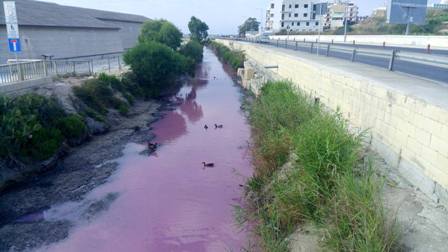
During the day the Environment and Resources Authority (ERA) was in receipt of a report that the water in the Tas-Sukkursu canal had a reddish colour.
The Authority has immediately taken action to identify the source and is currently investigating the case together with the assistance of the Environment Health Department. The Department of Biology of the University of Malta was also involved to assist.
ERA and IUCN discuss the Future of Marine Protected Areas with the European Commission and other stakeholders
ERA, in collaboration with the International Union for Conservation of Nature (IUCN) European Regional Office, organised a workshop, which brought together the European Commission, representatives of European Member States, and other foreign and national organisations, marine specialists and stakeholders, to discuss the protection of European seas and oceans and to share first hand experiences of the opportunities and challenges of protecting Europe’s marine environment. It was clear that amongst the main aspects to feature in future discussions related to the marine environment are invasive alien species, stakeholder involvement, fisheries and financing.
During the workshop entitled “Marine Protected Areas: Initiatives and Opportunities” the successes and challenges of managing Marine Protected Areas (MPAs) were explored, through European examples from Malta, Sweden, Spain and EU Overseas Countries and Territories and Outermost Regions.
The need to move beyond the designation of MPAs, which although important is only the first step towards protecting Europe’s seas, was discussed, and the need for adequate management so as to sustainably protect our seas was emphasised. Pollution and invasive alien species were highlighted amongst important issues negatively affecting the state of the marine environment; such issues, and others, need to be addressed in order to improve conservation status of habitats and species, and the state of the marine environment overall.
Enhancing MPA management centred around the importance of including and involving all stakeholders in marine protection and management, was also debated. The future of Europe’s seas concerns all actors, particularly local and small-scale fishers, who have a role to play to ensure the successful conservation of Europe’s seas and oceans.
“Protecting our oceans is the business of all of us. Local, national, regional and global coordinated efforts of all actors are needed: working together is a must,” said Luc Bas, Director, IUCN European Regional Office.
The results from this meeting aim to feed into upcoming discussions surrounding the topic of marine protection, including Our Ocean Conference to be held in Malta in October 2017.
It is pertinent to note that efforts to protect the marine environment around Malta are currently being made in line with the requirements of Aichi Biodiversity Target 11 (under the United Nations Strategic Plan for Biodiversity 2011-2020) and Resolution 50 from the IUCN World Conservation Congress 2016. As also explained at the opening of the workshop by Prof. Victor Axiak, ERA Chairman, Malta has committed a major increase in the cover of marine protected areas in 2016 – with an additional 3,450 km2 chosen to form part of the European Union’s Natura 2000 network. Their selection was based on the results of two EU LIFE+ projects – LIFE+ MIGRATE focusing on dolphins and turtles, and LIFE+ Malta Seabirds Project focusing on seabirds.
Together with another 5 marine sites that had been previously designated (based primarily on the presence of Posidonia beds), marine designated sites now cover 30% of Maltese waters – equivalent to 11 times the size of the Maltese Islands. Further to this, an ongoing project, LIFE BaĦAR for N2K, addresses selected marine habitats, aimed at extending or identifying new marine Natura 2000 sites. Furthermore, public consultations have taken place in relation to the setting up of the programme of measures related to the Marine Strategy Framework Directive, and in relation to the management of marine protected areas. The latter is being complemented with meetings with relevant stakeholders, with the aim to discuss the setting of relevant management measures for the designated MPAs.
For further information, please contact us on:
T: + 356 2292 3500

Moving towards resource efficiency through improved landfill management
The Environment and Resources Authority (ERA) is participating in an Interreg Europe project bearing the name COCOON – Consortium for a Coherent European Landfill Management Strategy. As part of this project participating countries will exchange best practices on landfill waste management issues and create a handbook of guidelines to showcase the outputs of this project.
This project, which will run till 2022, has a total budget of €14M with around €176,000 going to the Maltese partners, ERA and Wasteserv Malta Ltd at a co-financing rate of 85%.
ERA will be holding its second stakeholder meeting a number of key local stakeholders on landfill management. The meeting, schedule for this week, will serve as a forum for stakeholders to share their views and expertise and hone in on common efforts that may be applied international to improve landfill management policies.
During this meeting, discussions will also result in the mapping and prioritization of landfills that are being considered by this project, including the Għallis Landfill. Landfills making this list will be considered a priority for further management and funding within Europe.
The COCOON project will contribute to an increase in local knowledge of landfill mining and rehabilitation, and are being seen as a possible means of improving the situation in Malta where the limited space makes landfilling a major challenge in the Maltese islands.
The views gathered through these meetings will be shared during the next Interregional Exchange of Experience meeting among the eight COCOON partners from Malta, Andalucia (Spain), Bradenburg (Germany), Cyprus, Flanders (Belgium), and the Netherlands. This international meeting will be held in Malta between 31st May and 2nd June.
Kindly note that in those instances where contents of the submitted emails involve either shared competences or do not actually fall under the competence of this Authority, you will be duly notified that your message was forwarded to the relevant Entity for their attention. You can then continue to follow-up and communicate directly with the entity featured in the forwarding address.
By clicking 'Accept Terms' you are accepting the terms mentioned above.