Students from nine different schools gathered at Buskett to discuss their ideas for a better environment with Environment Minister Miriam Dalli and the Environment and Resources Authority (ERA).

The activity followed similar ones held last year, in which Minister Dalli and schoolchildren agreed to continue meeting every year to discuss new proposals and assess progress on several green initiatives.

The children talked about different topics, including urban greening, sustainable transport, access to natural sites, groundwater, marine litter, climate change, waste management and energy efficiency. Among different ideas, they proposed organic farming on roofs, more family picnic areas, information campaigns on the impacts of littering, increased greenery in classrooms and adventure zones in parks, such as the recently opened obstacle course race (OCR) area at the San Klement Park.

Students from St Thomas More College Santa Lucija Secondary School, Sacred Heart College, St Ignatius College Qormi San Gorg Primary School, St Nicholas College Rabat Primary School and Dingli Secondary School, Maria Regina College Mosta Secondary School, St Margaret College Senglea Primary School, San Andrea School and St Benedict College Kirkop Secondary School participated in the event, which was hosted at Ambjent Malta’s new educational centre, within the grounds of the Buskett Woodlands.

Minister Miriam Dalli thanked the students for accepting ERA’s invitation to share their ideas on the environment.

“Last year we met and discussed many interesting ideas. ERA presented an update on how Malta is implementing many of them as part of our shared mission for a more sustainable future. I encourage children and youths to continue to come forward and join in the public debate about our environment. Your ideas are very important to us. All institutions must make sure to listen to what you have to say, as ERA is doing with these meetings. I look forward to meeting you again next year,” Miriam Dalli said.

ERA Chief Executive Officer Kevin Mercieca also emphasised the importance of listening to younger generations during the development of long-term plans and strategies which will address the future of the environment. “The views, opinions and proposals offered by children and youths give us food for thought in shaping a future which will be most fitting for their wellbeing and quality of life,” he said.

Following the discussion, Ambjent Malta guided the children to an educational walk at the Buskett Woodlands, where they also participated in a hands-on session on sustainable Christmas crafts. The event was also supported by Ekoskola, a Nature Trust – FEE Malta initiative across all schools in Malta and Gozo, to empower students to appreciate the environment and seek sustainable actions in their lives.

ERA Chairperson Vince Cassar and Ekoskola coordinator Paul Pace and other educators and officials also participated in this event.

28 December 2023

The ERA Board has approved the Environmental Impact Assessment (EIA) report analysing the development application PA 00993/23 (EA 00019/22) for a new plant to convert organic waste to electricity and compost, as part of WasteServ Malta’s ECOHIVE Complex.

The EIA and ERA’s considerations about this project form part of the Planning Authority process to determine the development permit required to construct this new plant, which will contribute to the implementation of the country’s Long Term Waste Management Plan 2021-2030.

Malta already processes all organic waste (white bag) separated by households and businesses and converts it into electricity through an existing WasteServ Malta plant. However, large quantities of organic waste are still being disposed of illegally in the black bag (for mixed, non-recyclable waste), ending up in landfills. In coming years, households and business will continue to increase the separation of organic waste through different measures and initiatives, including the enforcement of the mandatory waste separation regulations introduced earlier this year by ERA.

The new plant being proposed by WasteServ will be able to increase the processing of the planned increased quantities of separated organic waste, which will be converted to biogas, to be used as a sustainable fuel to generate electricity. As part of this process, the plant will also produce agricultural compost. This facility is expected to process around 74,300 tonnes of organic waste every year.

After studying the project’s impacts, ERA confirmed that the new plant will have a net environmental benefit, forming a fundamental component in Malta’s waste management strategy. Such processing plants are important as they sustain a drive towards waste minimisation at source and give preference to reuse and recycling over less sustainable options, including landfilling, thus helping to achieve the targets set by the European Union’s Waste Framework Directive by 2035.

 During the Board hearing, it was noted that great improvements in waste separation and management performance have been registered in recent years, with 2023 marking the lowest annual quantity of black bag waste ever received by WasteServ in the last 21 years, despite a significant population increase. Infrastructural investments in new and more efficient facilities that can continue turning separated waste into a resource, such as the organic waste plant proposed by WasteServ, will maintain this positive trend in coming years.

The new plant will include an administration building, a weighing room, an energy building, a boiler, as well as fuel storage, mechanical pre-treatment, dewatering, post-treatment and wastewater treatment facilities.

In addition to the decision above, the ERA Board also approved another permit (IP 0005/20) for the variation and renewal of (IP 0004/12/B) a permit for an existing commercial waste processing facility. The new permit will allow Gasparell Baling Co. Ltd to conduct wire stripping operations in its facilities, in line with Best Available Techniques on waste treatment as required by EU law.

21 December 2023

The Mosta Local Council is currently undertaking works as part of the regeneration project of the Mosta Square. The work will entail the transplanting of ficus trees to the area of Santa Margerita in Mosta.

Ficus trees are a hardy species and normally survive transplanting if such transplanting is done at the appropriate time of the year, normally between November and February. For successful transplanting trees need to be devoid of the canopy and the smaller branches to enable them to survive the move.

In the case of the Mosta square trees, the permit was issued during the most suitable period for transplanting of trees, whereby it allows for the tree to acclimatise, and roosting birds are versatile to find alternative trees, during this period when winter has not set in yet, until the new trees grow enough to have a hosting canopy.

The permit issued by ERA imposes the replanting of replacement trees that would have a good canopy that allows for shade and bird nesting.  These include Holm Oaks and Judas Trees.

There are instances where trees in the urban environment are required to be removed to implement urban regeneration projects, tackle damage caused by the roots of some tree species and allow the use of public open spaces in a more practical way.  We also need to consider that project proponents, who are often obliged by ERA to plant trees as part of their projects, are not discouraged from planting more trees due to fear of having a lifelong commitment to preserve them without the possibility of future embellishment of their localities/projects. With careful planning, such interventions may be allowed in a careful manner and without resulting in a net environmental loss.

13 November 2023

A new flowering plant has been discovered and described for the first time in a scientific work published on the 25th October 2023. This new endemic species, named Limonium lanfrancoi, is only found in a small area within the Maltese archipelago and is unique to the world. It is considered an endangered species with a very restricted distribution in the Maltese Islands.

The Lanfranco’s Sea Lavender, (Limonium lanfracoi, il‑limonju ta’ Lanfranco in Maltese), was described by a team from the University of Malta and the Università di Catania. The Maltese scientists included Ms Dorita Agius who is a lecturer at Junior College and a student at the Centre for Molecular Medicine and Biobanking of the University of Malta. The team from Catania included Professor Salvatore Brullo, who has done extensive studies of the flora of Malta and is considered an authority on the group of plants Limonium.

The flowering plant is a small woody shrub living along a very narrow coastal limestone rocky strip, and is named after Mr Edwin Lanfranco, a valued Maltese botanist and author of several major contributions to the floristic knowledge of the Maltese Islands. It shows close relationships with another coastal flowering shrub unique to the Maltese Islands, the Maltese Sea‑Lavender (Limonium melitense, il‑limonju ta’ Malta), from which it differs genetically and in some other physical features.

The scientific publication also provides a detailed analysis for the four different sea‑lavender species identified in Malta and their conservation status, which also include a third endemic sea‑lavender, also unique to the Maltese Islands, namely the Zerapha’s Sea Lavender (Limonium zeraphae, il‑limonju ta’ Żerafa).

Ms. Dorita Agius noted that,

“’New species often develop in isolated environments, where they change to adapt to the specific environment. Plant species living on the Maltese shoreline are adapted to this harsh environment. We are planning to study these characteristics to be able to improve crop production especially with the steadily increasing global temperatures.”

It is also noted that the new Limonium species is strictly protected in Malta in terms of the Flora, Fauna and Natural Habitats Protection Regulations (SL 549.44) under the Environment Protection Act (Cap. 549). Its collection, picking, sale, transport and export are prohibited, but permits may be granted for selected reasons, including scientific research. The other two endemic sea-lavenders are also protected, and the same restrictions apply. Should more information be required on permitting considerations, more information is available here.

The new species is located in an area protected under the Environment Protection Act (Cap. 549), which is also a site declared as a Natura 2000 site under the EU Habitats Directive. The exact location is not being disclosed due to it highly restricted distribution, so as to safeguard it due to its rarity.

Mr Darrin T Stevens, Director Environment and Resources within the Environment & Resources Authority (ERA) thanked Ms Dorita Agius and her co‑workers for spearheading this work as part of their research and emphasised how such research work is changing our perspective on our rich biodiversity, noting how so many new native species being described from Malta is the last few years.

This research work was carried out in accordance with environmental permits issued by the Environment & Resources Authority. These studies are enabled by research grants from the Malta Council for Science and Technology – Research of Excellence: EDGE (REP-2020-009) and EPOM (REP-2023-033) and IPAS+: CoL (IPAS-2022-005) and CoLII (IPAS-2023-014).

11 November 2023

Photos: Dorita Agius

The ERA Board has considered and approved two authorisations for improvements and extensions to existing waste facilities.

The Authority approved a WasteServ Malta Ltd proposal for a variation to a permit IP 0004/07/C in relation to the thermal treatment facility at Albert Town, Marsa. The application included changes to the facility such as the introduction of a dual fuel burner, and upgrades to its odour abatement and autoclave equipment.

During the same sitting, the ERA Board also approved the operation of a new WasteServ installation for the temporary storage and limited processing of recyclable waste, such as wood, mattresses and expanded polystyrene (IP 00102/22). This installation is located at WasteServ’s facilities in Hal Far.

Profs Victor Axiak, Profs Alfred Vella, and Ms Mary Gaerty have been awaded this year’s prestigious Buonamico Award.

The Buonamico Award is a yearly award-giving ceremony held under the patronage of H.E. President of Malta which distinguishes individuals whose actions and achievements benefited our biodiversity and the environment.

This prestigious award has been inspired Malta’s first naturalist, Giovanni Francesco Buonamico, who had recognized the importance of our natural environment in the 17th century. His varied intellectual interests resulted in the writing of at least four important manuscripts on natural history including the first flora of the Maltese Islands, the so-called “Brevis Notitia” manuscripts which acted as the basis for today’s modern reference books.

Buonamico’s role was pivotal for an environmental regulator’s perspective, with scientific evidence based work as the basis of all decision taking measures, to assure correct implementation to safeguard the Environment from a legislative perspective.

This year, 3 distinguished members of the public have been chosen for their direct impacts on our natural environment and biodiversity.

Professor Victor Axiak has been a Professor in Biology at the University of Malta for almost four decades, where he has held various administrative posts including Head of Department, Dean of Science, and then Deputy Dean of Science.

During this time, he was actively involved in environmental matters and conducted research in marine pollution and the application of a wide range of ecotoxicological tools to evaluate local marine quality, ranging from molecular biomarkers to satellite remote sensing. Such research included the first use of imposex as a biomonitoring tool for antifouling agents in the Mediterranean, and the first surveys of microplastics in local sandy beaches. During the 1980s he coordinated the first monitoring and research of jellyfish blooms both locally and in the Mediterranean. He has lectured on environmental matters in several foreign universities including that of Dalhousie (Halifax, Canada) and of Barcelona and lectured in international postgraduate courses on environment in the Mediterranean.

He has been a member of various national bodies on environment and sustainable development. He was a Board member of the Malta Environment and Planning Authority, and subsequently of the Planning Authority. Since its inception in 2016, he had chaired the Environment and Resources Authority until January 2023. During the early 2000s he was instrumental in the setting up of the Interdiocesan Environment Commission of the Church in Malta where he acted as chairperson for 10 years until 2013. For several years, he acted as an environmental consultant to various local and international agencies, departments and private companies. He has published and/or co-edited numerous books various scientific papers and reports.

Profs. Alfred J. Vella served as Head of Chemistry, Dean of the Faculty of Science, Pro-Rector for Academic Affairs and Rector of the University of Malta. For over 30 years, Vella’s outreach commitments extended beyond University walls serving; the Magistrates Court as forensic expert in judicial inquiries on fires, explosion and chemical accidents; consultancy services to state and non-state entities including acting as environmental advisor to Deputy Prime Minister Dr George Vella as vice-chair of the Consultative and Advisory Board for the Environment (CABE) (1996-1998). Vella was a Board member of the Planning Authority, the board of governors of the Malta Council for Science and Technology and Heritage Malta and most recently was an ERA board member for 7 years until February 2023.

Over a period of over 50 years, Professor Vella has effectively contributed to the environment through his work, both as a researcher and as a trainer. He has trained hundreds of students, many of whom today work in the environmental field, including scientists, University academics, in regulatory agencies, manufacturing industries and teachers of science in schools and colleges. Vella’s research on the quality of Malta’s environmental resources include years of work on the contamination of coastal seawater, marine biota and sediments by tributyltin then used in ship antifouling paint: this contaminant was shown to be pervasive and even present in settled outdoor and indoor dust.

Professor Vella was instrumental in pushing into national focus awareness and discussion of issues like nitrates in tap and bottled water; black dust deposition; benzene in air; particulate dust pollution from the construction and ship repair industries and widespread and persistent pollution by toxic metals and perchlorate from fireworks.

Mary Gaerty is the co-founder and chairperson of Green Skip Services Ltd, a waste management and consultancy company. Understanding the potential long-term environmental impacts of waste management in the context of the limited knowhow available in Malta at the time, she opted to prioritise education and training. She took the initiative to take the discussion to the relative authorities, raising awareness and highlighting the importance of personal safety for staff, for proper packaging and for safe disposal subsequently successfully obtaining certification in numerous other areas of waste management, including packaging, export, categorisation and safety.

Mary Gaerty focused on education which was at the forefront of her efforts from the outset, including through school visits aimed at communicating to children the importance of environmental protection and of reusing, reducing and recycling, at a time when these notions were still years away from being incorporated into the national curriculum, mentoring numerous students working on their theses in areas related to her competence. Ms Gaerty remained active in this area and beyond becoming a Full Member of the Chartered Institute of Wastes Management in 2016, President of the National Council of Women (NCW) chairing the Council’s Environment Committee, leading entrepreneurship projects, lobbying for more opportunities for women to enter the labour market, and raising awareness on domestic violence and human trafficking, amongst other issues.

Throughout her career, she has been involved in numerous consultation meetings dealing with the environment, particularly in the waste management sector, including issues linked with recycling options and circular economy.

The Scout Association of Malta and the Malta Girl Guides where also honoured and awarded the Buonamico Special Recognition Award for their sterling work in the envirnomental domain.

Both the President of Malta, His Excellency Dr George Vella, and ERA’s Chairman, Perit Dr Vincent Cassar, congratulated the winners and their families, whilst thanking them for their priceless efforts towards the environment and for bravely spearheading initiatives that started to bring about societal change within Malta and amongst the Maltese.

4 November 2023

The Environment and Resources Authority welcomes the decision taken today by the Environment and Planning Review Tribunal (EPRT) confirming a decision taken by ERA in 2019, when it designated Tal-Wej as a Special Area of Conservation of both National and International Importance.


Covering an area of 203,484 m2, within the limits of Mosta and Naxxar, the ERA had designated the Tal-Wej as a Natura 2000 protected site. A number of landowners had objected to the decision. Today, the Tribunal confirmed the importance of protecting the site in its entirety, as part of the European Natura 2000 ecological network.


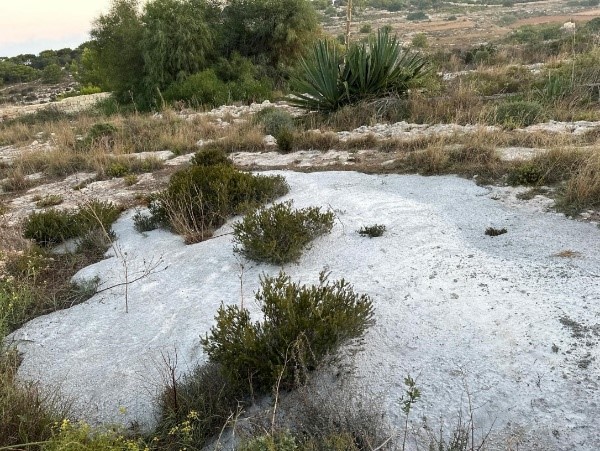
The Tal-Wej is characterised by temporary freshwater rockpools that form in outcrops of the Lower Coralline Limestone.  These freshwater rockpool habitats are locally scarce due to their temporary nature, small size and limited distribution.  They host flora such as the Maltese Waterwort (Elatine gussonei), the Maltese Horned Pondweed (Zannichellia melitensis) and fauna such as the Tadpole Shrimp (Triops cancriformis) and the Painted Frog (Discoglossus pictus).  Additionally, the area also hosts garrigue and grassland habitats.


The area is also listed as a Class A archaeological site, forming part of a wider cultural landscape that includes cart-ruts, dolmens, ancient quarries, rock-cut tombs, corbelled huts and a 16th century chapel dedicated to Santa Margherita.

The Environment and Resources Authority (ERA) hosted the plenary meeting for the National Focal Points (NFP) on the European Environmental Information and Observation Network (Eionet), bringing together officials from the European Environment Agency (EEA), representatives across the EEA members and cooperating countries as well as the European Topic Centres.

The joint task to give EU policy makers and the public, the best available knowledge to reach the targets on environment and sustainability. Eionet also serves as a collaborative network, connecting the EEA, its member countries, and various stakeholders to provide high-quality data.

During the two-day plenary meeting, which was held between the 10th and 11th October, attendees discussed and reflected on potential ways to enhance country level engagement between national stakeholders, to increase the uptake of environmental information and data across Europe. Malta actively participated during the meeting, delivering a presentation on best practices in Malta. Ms Elaine Cutajar, the National Focal Point for Malta on Eionet highlighted that “Such meetings are valuable to members of the network as they allow for effective discussions between countries, and create a space which welcomes ideas and solutions on the use and dissemination of environmental information. They also serve as a platform for countries to showcase their work strengthening the transfer of knowledge.”

Malta also hosted the EEA officials for a country visit with the national experts forming part of the Eionet network on the 12th October.

The EEA promoted the added value of engagement and cooperation with the various experts nominated on the network. It also acknowledged that Malta has increased its efforts in strengthening its participation and contribution to the network as well as align its practices with the EEA-Eionet Strategy 2021-2030. The EEA expressed its appreciation to Malta for its sterling work on the Eionet network throughout the past year which involved providing support to the EEA for preparing and coordinating the NFP Plenary Meetings and NFP’s feedback to the EEA as well as chairing the pre-meetings for NFPs.

For more information, visit www.era.org.mt

13  October 2023


From Sunday 15th October, individuals and businesses caught depositing waste in the wrong waste bags will be liable to fines of up to €150, as the six-month educational period on the new mandatory waste separation regulations ends this week.

In the coming weeks, ERA officials and other enforcement officers will be continuing inspections across Malta and Gozo, to ensure that households and businesses are separating waste properly in the three waste bags specified by law – the white bag for organic waste, the grey or green bag for recyclable waste and the black bag strictly for other waste.

Enforcement officers are authorized by law to check bags taken out for collection by households and businesses, and to issue warnings and fines when waste items are found in the wrong bag:

1st offence 2nd offence 3rd offence
Households Official Warning €25 €50
Businesses Official Warning €75 €150

From July 2024 transparent black bags will become mandatory instead of the current black bags for municipal waste collection, making it easier for enforcement officials to check the content of bags without opening them.

Meanwhile, separate fines of €150 continue to apply for persons taking out waste bags on the wrong day. In January, regional councils launched a new municipal waste collection schedule for all localities. Organic waste bags are collected on Mondays, Wednesdays and Fridays, while black bags are collected on Tuesdays and Saturdays. Grey or green bags for recyclable materials are collected every Thursday. Glass is collected on the first and third Friday of the month.

Mandatory waste separation regulations were introduced in Malta last April, as ERA launched a six-month educational campaign to help the public gradually adapt to this new waste management system.  During the last six months, ERA enforcement officers conducted more than 2600 inspections in different localities to ascertain compliance with national waste schedule and educate on waste separation.

ERA encourages everyone to properly separate waste, to contribute to a more sustainable future and avoid the consequences of non-compliance. By properly separating waste, households, businesses, government entities and other organisations can help increase the sustainable management of waste, to be recycled or processed to generate clean energy, while reducing the negative impacts of landfilling on the environment.

Through the Long-Term Waste Management Plan 2021-2030, Malta is working to reduce landfilling to 10% of total municipal waste by 2035.

For more information, visit wastecollection.mt, the online waste separation and collection guide available in ten different languages.

12 October 2023

Two juvenile turtles called Nadia and Maria have been released back into the wild earlier this morning after almost 2 months of treatment at the Wildlife Rehab Centre project.

The Wildlife Rehab Centre Project is operated by Nature Trust Malta – FEE, with the financial support of the Environment and Resources Authority (ERA), which sponsors the rehabilitation of injured wildlife. ERA also works closely with the eNGO on several other environmental initiatives.

The turtle named Nadia was rescued on the 4th August 2023 when she was found floating on the surface with a hook in its mouth, while the turtle named Maria was rescued on 20th August 2023 after ingesting lots of plastics – she also had several old scars from past injuries.

NTM President CEO Vince Attard once again appealed to the public to keep beaches clean and plastic free. Attard said that

Plastic pollution is on the increase and is badly effecting us and marine life. Disposing of Waste in the appropriate bins even on land is of utmost importance and crucial to reduce plastic waste at sea.”

ERA CEO, Kevin Mercieca, said that the Authority is developing policies intended to reduce as much plastic waste as possible through updated legislation – namely the ban on the importation and sale of SUPs on the local market and a number of other measures covered under the Single Use Plastic Strategy for Malta 2020-2030.

This also goes hand in hand with other waste related initiatives intended to reduce waste in general, such as the mandatory waste separation regulations introduced in April.  All these policy initiatives help reduce the amounts of waste plastic ending up in the sea putting the life of marine biodiversity at risk”.

Fines for incorrect Waste separation come into force on the 15th of October 2023.

For more information, visit era.org.mt and naturetrustmalta.org

10 October 2023