ERA is putting forward the following clarification with a view to amending the article that appeared on the Times of Malta online, entitled “€100 fines considered as government says black bags are no place for electronic waste”, more specifically with a view to correcting the sentence “Introduced in Malta in 2015, the WEEE directive replaced the eco-contribution on electronic items.”

The WEEE directive 2002/96/EC has been in place in the European Union before Malta joined the EU in 2004. This directive was transposed initially through the Waste Management (electrical and electronic equipment) regulations Legal Notice 63 of 2007, which came into force on 23 March 2007, making this the date from when producers in Malta have been obliged to abide by the requirements of these regulations.

The WEEE directive was recast in 2012, following which new regulations (the Waste management electrical and electronic equipment regulations) were issued as Legal Notice 204 of 2014. The latter regulation came into force on 14 February 2014 and has since been amended by L.N. 232 of 2015.

The putting in place of the new legislation following the recast of the WEEE Directive, the subsequent amendments and the removal of Electrical and Electronic Equipment (EEE) from the Eco Contribution Act regime in 2014-2015 were all part of a reform aimed at improving the implementation of the WEEE directive in Malta and bringing Malta closer to achieving its targets in this sector.

In addition, ERA also wishes to clarify that the Authority is the main regulator in the area of waste management including the WEEE sector.

For any further clarification, kindly contact ERA on [email protected]

ERA received report of an oil spill at Il-Bajja tar-Rinella and immediately dispatched its officers to go on site to assess the incident, while bringing this incident to the attention of Transport Malta and the Civil Protection Department, who are the competent authorities coordinating the management of oil spills at sea. The cleanup is currently under way.

Transport Malta informed ERA that the spill consisted of diesel oil.

ERA gave direction for the waste oil gathered from this cleanup operation to be transported by a registered waste carrier to a permitted waste management facility for treatment.

Investigations by ERA officials are currently ongoing to determine whether other sites have also been affected.

With reference to the article which appeared in the Gozo News on 24th December 2016 titled “English Ivy – another non-native plant causing damage to trees at Lunzjata”, the Environment and Resources Authority would like to clarify that the Common Ivy (Hedera helix) is a native species to the Maltese Islands.

This perennial species, in Maltese known as il-liedna, is an evergreen climber, native to most of Europe and Western Asia. In Malta, it is found growing naturally in many different sites, such as at Il-Buskett. It is a climbing or ground creeping woody plant which can grow horizontally as a dense groundcover, or vertically on suitable surfaces as are living trees, rocky outcrops, or masonry structures. It is able to climb to a height of up to 25m, doing so by attaching itself to any surface by means of short aerial roots which cling to the substrate.

The yellowish-green flowers of the Common Ivy flower in October. Being rich in nectar they are an important food source for bees and other insects. The shiny dark green leaves can be of two kinds; those on flowering stems are simple and ovate, whilst those on creeping and climbing stems are usually three-lobed to heart-shaped. The small fruit is a hardened berry which turns to a bluish-black colour in winter when it ripens.

The word ‘helix’ is derived from Ancient Greek and refers to the ability of the plant to twist and turn so as to cling to nearby structures. This plant has been used by man since ancient times; the Romans, for example, used the ivy as part of their celebrations to the god Bacchus, where worshippers are thought to have worn Ivy crowns. Also, in the past, leaf and berry extracts were taken orally to treat coughs and bronchitis.

Wasteserve, as the operator, and the Environment and Resources Authority (ERA), as the regulator, will be participating in an Interreg Europe project, bearing the name COCOON. The name of the project reflects the change happening during the metamorphosis of waste through the concept of landfill mining. This project aims to improve regional policy on landfill management within the participating regions and countries.

This project has a total budget of €14M with around €176,000 going to the Maltese partners at a co-financing rate of 85%. Its total duration is 60 months and will run until February 2022. I-Cleantech Flanders, a Belgian entity, is the coordinator and brings together 8 partners from the countries of Cyprus, Belgium, the Netherlands, Spain and Malta.

The objective of this project is to develop, integrate and improve relevant policy instruments, while increasing subsidies through operational programmes for landfill management projects, bringing together distinct EU regions to share and capitalise on regional good practices. As a result of landfill management projects, the recovery of resources as well as land recovery is increased while future environmental hazards can be avoided. Moreover, landfill management projects generate economic development opportunities and create new green jobs, all within the context of an EU-wide transition to a resilient, low-carbon, circular economy.

Since the 1950’s, Europe has been disposing significant amounts of waste in landfills. In fact it is estimated that over 450,000 non-sanitary landfills in Europe have limited environmental protection technologies. In light of this, the European Commission has acknowledged that a vision for managing Europe’s landfills is urgently required. Landfills are to be considered as dynamic stocks of resources that can be integrated into the economy, while landfill management supports reclaiming land and avoids astronomic remediation and aftercare costs.

Malta, an island state with limited land available for landfilling, is participating in the COCOON project through two key stake holders in waste management – Wasteserv and ERA, which fall under the remit of the Ministry for Sustainable Development, the Environment and Climate Change. The project’s objectives fit with Wasteserv’s vision – that of creating resources from waste. In fact the company’s educational drive focuses on changing people’s behaviour and have them move away from disposing in landfills and closer to the concepts of reducing, reusing and recycling. This is in line with the waste management hierarchy, which is also the underlying principle of the waste legislation which ERA manages.


​More than €1,000 was raised by the Environment and Resources Authority (ERA) for charity, during the Christmas festive season. ERA, with the support of UNITE, the ERA staff sports and social committee, promoted an initiative during which all gifts and hampers received by its employees were donated to the Dar tal-Providenza, Siggiewi. During their annual fund-raising campaign held on the 1st of January 2017, the Dar tal-Providenza used all the gifts and hampers donated by ERA to organise various raffles to raise these funds.

A further €1,000 was raised during the ERA staff Christmas activity. These were donated to L-Istrina.

The Environment and Resources Authority (ERA) Board has today, 19 December 2016, approved the IPPC permit authorising the continued operation of Delimara 1, 2a and 2b to be operated by Enemalta Plc., Delimara 3 (conversion from HFO/ gasoil to Natural Gas) to be operated by Delimara 3 Power Generation Ltd., and Delimara 4 CCGT and LNG Terminal to be operated by ElectroGas Malta Ltd. at the Delimara Power Station (DPS).

The IPPC permit issued covers a number of monitoring obligations which operators are to fulfil throughout the validity of the permit to ensure the required level of environment protection.

This permit is for a multi operator installation under the Industrial emissions (IPPC) Regulations, and includes a regulatory framework which covers operations common to all three operators, as well as operator specific sub permits regulating the operations of individual operators.

Electrogas Malta Ltd as operator of the Floating Storage Unit (FSU), Regasification plant and the three new combined cycle gas turbines are required to submit specific information (as detailed in the permit) during the pre-commissioning and commissioning phases of the plant. Approval by ERA and other Regulatory Authorities such as Transport Malta (TM) and the COMAH Competent Authority is required to enable the operator to progress from one phase to the other to ensure that all required obligations covered in the relevant previous phases have been fulfilled.

Delimara 3 Power Generation Ltd., who is responsible for the conversion of the diesel engines to be operated on gas are also to fulfil certain commissioning obligations prior to enabling full operation of the plant.

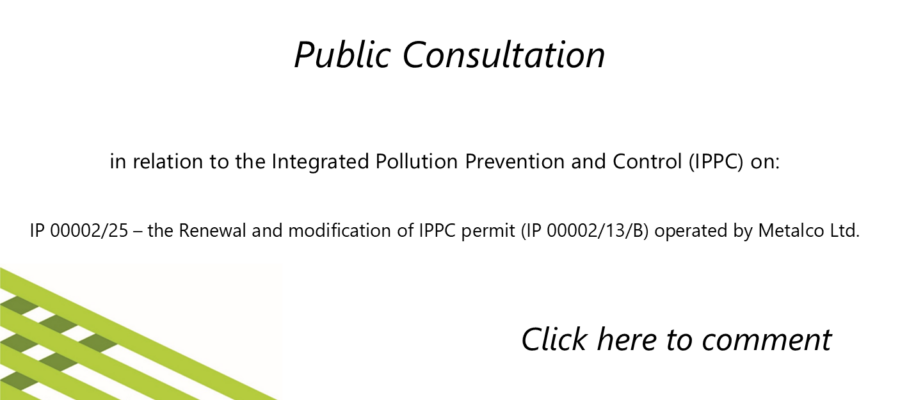
All public consultation documents are available on the ERA website here

Malta will be part of a European earth monitoring system through a consortium that includes the Planning Authority, the Malta Council for Science and Technology and the Environment and Resources Authority.

Click here for the full article.

​​Advert ​for the Delimara Power Station Public Consultation

The Environment and Resources Authority would like to notify the public that the 30 day public consultation for the Environment Impact Assessment process and the IPPC application will commence on Wednesday 19th October and will close on Thursday 17th November.

The Authority has requested the operators to make the applications and the related documentation together with the EIA documents available at the Marsaxlokk, Birzebbuga and Zejtun Local Councils.

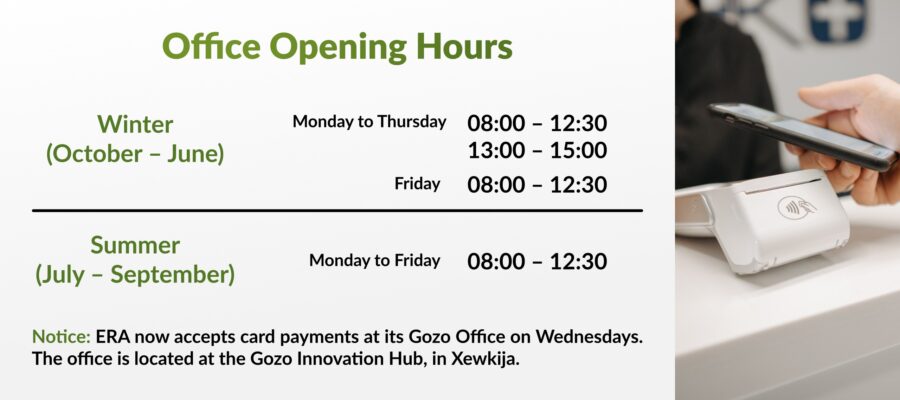
As advertised on the Sunday newspapers, during this period, hard copies of all these documents will also be available for viewing at the Authority’s offices in Hexagon House, Spencer Hill, Marsa between Monday and Friday from 7:00 to 12:00 and from 13:00 to 15:00 and online on the Authority’s website.

The public is invited to review these documents and submit any comments in writing by the 17th November, to the Environment and Resources Authority by either sending an email on [email protected] or [email protected], as relevant, or by writing to the Authority at the address below:

Director of Environment
IPPC: (IP0002/07/E)
Environment and Resources Authority
Hexagon